
Key takeaways
- Étiquetage de tubes : une étiquette adhésive imprimée à part, puis posée automatiquement sur des tubes plastique, aluminium ou laminés.
- Différence avec la sérigraphie : l’encre n’est pas imprimée sur le tube, ce qui offre plus de flexibilité.
- Avantages : moins de transports, une maîtrise complète du process et des frais techniques réduits.
- Petites et moyennes séries : une solution adaptée, avec un produit fini livré prêt à être commercialisé.
Tube labelingis a technique that involves applying an adhesive label directly to the surface of the tube. Unlike screen printing, which prints ink directly onto the material, labeling uses a separately printed label that is then applied to the container.
Cette méthode de conditionnement de tubes offre une flexibilité remarquable et répond particulièrement aux besoins des entreprises qui recherchent une solution clé en main pour la décoration de leurs produits.
Etraves, a specialist in custom packaging for over 30 years,has integrated tube labeling into its production line. This approach allows the company to offer customers a comprehensive service, from filling to the delivery of afinished productready for sale.
What is tube labeling?
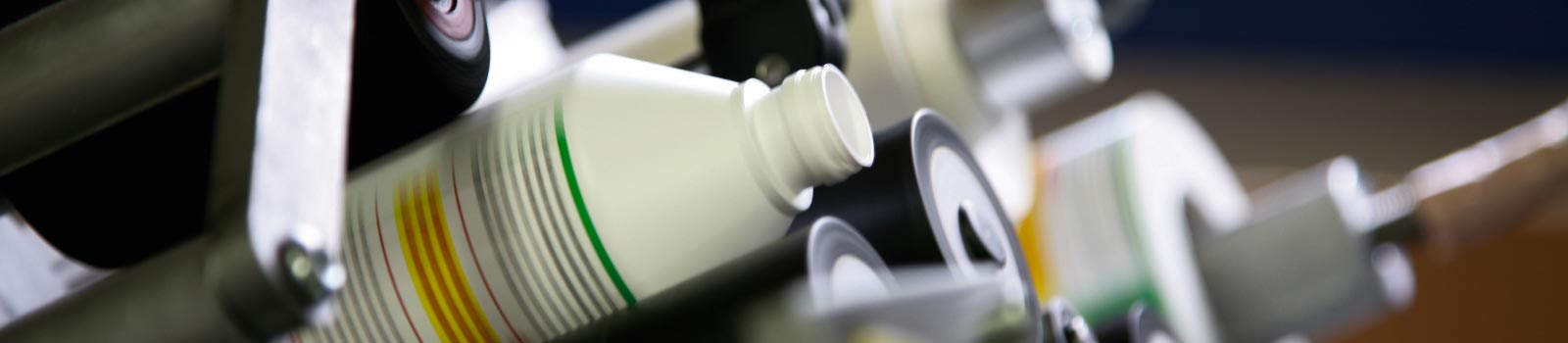
TheTube labeling refers to the process of applying anadhesive labelto the outer surface of a tube. This label, which is pre-printed according to the customer’s specifications, is automatically applied to the tube as it passes through the packaging line. The tubes in question can be made of various materials: plastic (PE, PP), pure aluminum, or laminated materials combining multiple layers.
Labelsareprintedin high definition, allowing for the reproduction of complex designs with great precision. Modern printing technologies allow for the use of a wide range of colors, subtle gradients, metallic effects, spot varnishes, and even holographic finishes. This wealth of graphic possibilities makes it possible to create premium designs that enhance the brand image of the packaged product.
The labeling process is carried out directly on thepackaging line, allowing it to be integrated into a comprehensive service. The tube goes through the filling, capping, labeling, and secondary packaging stages in sequence. The customer thus receives tubes that are decorated, filled, and ready for distribution, with no additional handling required on their part.
An ideal solution for small and medium-sized production runs
TheTube labeling stands out for its adaptability to varying production volumes. This technique is particularly well-suited forsmall and medium-sized runs, where other decoration methods require high minimum quantities to be economically viable.
This solution also offers environmental benefits, as it allows for packaging only the necessary quantity. It thus minimizes the potential waste resulting from unsold products or those that have become obsolete due to regulatory requirements related to set changes.
Companies launching new products, testing a market, or marketing limited editions find that labeling offers a solution tailored to their needs. It is possible to produce a few hundred or a few thousand decorated tubes without incurring disproportionately high fixed costs. The ability to change the design between production runs also providesvaluable flexibilityfor adjusting product messaging based on market feedback.
Forsmall and medium-sized businesses, startups, and emerging brands, tube labeling offers the opportunity to provide products with attractive packaging without having to tie up large inventories of pre-decorated tubes. This flexibility represents a significant competitive advantage in markets where the ability to adapt quickly often makes all the difference.
The Benefits of Tube Labeling for Your Packaging
TheTube labeling offers numerous benefits for companies looking to optimize their packaging processes. This technique addresseseconomic, environmental, and operational challenges, making it a particularly relevant solution in today’s industrial landscape.
1/ A more eco-friendly approach thanks to the elimination of transportation
One of the major advantages of in-house labeling is itsreduced environmental impact. When labeling is done in-house by the packager, there is no longer a need to send empty tubes to an external service provider and then retrieve them before filling.
Eliminating these round trips results inzero additional transportationand, consequently, a significant reduction in the carbon footprint associated with packaging. This approach is fully aligned with the sustainable development and environmental responsibility goals pursued by many companies.
2/ Complete control over the packaging process
By integrating labeling into the contract packaging, Etraves maintainscomplete controlover all operations. This vertical integration ensures greater responsiveness to customer requests, enhanced quality control at every stage, and optimal traceability of packaged products.
Centralizing all operations with a single service provider also simplifies communication and reduces the risk of errors associated with having multiple parties involved.
3/ Significantly reduced technical costs
Labeling helpsreduce startup costscompared to other tube decoration techniques. There is no need to produce specific plates, cylinders, or screens for each new design. Labels are printed independently, making design changes simpler and less expensive to implement.
This cost flexibility is particularly valuable for new product launches or packaging adjustments during the marketing phase.
4/ The ability to create complex and precise designs
Theadhesive labelsused fortube packagingincorporate the latest advances in printing technology. Digital and offset printing techniques make it possible to reproduce fine details, high-resolution photographs, subtle color gradients, and a variety of special effects.
Hot foil stamping, embossing, spot varnish (matte or glossy), and holographic effects: the creative possibilities are vast and help achieve a premium visual finish that enhances the product’s appeal to end consumers.
5/ Significant time savings on packaging
TheIntegrating labeling directly into theproduction lineeliminates intermediate steps and waiting times. The tube is filled, capped, labeled, and packaged in a single continuous flow, without any interruption in the process. This optimized workflow reduces overall delivery times and simplifies logistics management for the customer. This saves the time typically spent coordinating between different service providers.
Etraves: Your One-Stop Shop for a Complete Finished Product
Etraves offers acomprehensive contract packaging servicethat includes tube labelingas part of a complete solution. This approach allows customers to entrust their entire packaging process to a single partner, from the receipt of bulk products to the delivery of finished goods.
The services provided by Etraves include the receipt and inspection of raw materials, the filling of plastic, aluminum, or laminated tubes, high-definition labeling according to the provided graphic specifications, capping and crimping tailored to each type of container, as well as secondary packaging in cases or cartons.
The customer receives afinished product, ready to be integrated into their distribution chain or sold directly.
With over30 years of experiencein industrial packaging, Etraves holds certifications that attest to the quality of its processes.
Certification ISO 9001 certification ensures a rigorous quality management system, while the EcoVadis demonstrates the company’s commitment to social and environmental responsibility.
FAQ: Tube Labeling
What types of tubes are eligible for labeling?
Tube labeling applies to various types of containers, whether made of plastic (polyethylene, polypropylene), aluminum, or multilayer laminates. Etraves tailors the choice of adhesive label and application technique to the tube’s characteristics: its material, diameter, shape, and the conditions under which the finished product will be used.
Is tube labeling suitable for small quantities?
Yes, labeling is a particularly well-suited solution for small and medium-sized production runs. Unlike certain decoration techniques that require large production volumes to offset setup costs, labeling allows for the production of limited runs without disproportionate additional costs.
Is the packaged product delivered ready for sale?
Yes, Etraves offers a comprehensive custom packaging service that includes all the steps required to produce a finished product. The tubes are filled with the product, fitted with their closure systems, labeled according to the provided graphic specifications, and then packaged in their secondary packaging.